Your Honest Kilimanjaro Cost Guide: Plan Your Complete Budget
What is Inside
How Much Does Kilimanjaro Cost?
Your Honest Complete Budget Guide
If you’re asking how much does Kilimanjaro cost, you’ve probably already seen numbers that make no sense — one operator quotes $1,800, another wants $6,000, and both claim to be the real deal. You’re not wrong to be confused. The truth is that Kilimanjaro pricing is messy, and the headline number you see online is rarely what you’ll actually spend.
I run climbs on this mountain every season. I’ve seen what happens when travelers book the cheapest option without understanding what they’re giving up. I’ve also seen people overpay simply because they didn’t know how local pricing works. This guide is built to fix that — not with marketing fluff, but with real numbers, real trade-offs, and a clear picture of what your total trip will cost from start to finish. Consider this your Kilimanjaro total cost guide for planning a safe, well-supported trek.
By the time you finish reading, you’ll know exactly what a safe, well-supported climb should cost, where hidden expenses live, and which route and operator type actually fit your budget and your priorities.
Why Kilimanjaro Costs What It Does
Kilimanjaro isn’t just a long walk uphill. The mountain sits inside a national park, and Tanzania charges serious fees for every single day you spend there. These park fees — conservation fees, camping fees, hut fees, and rescue fees — are non-negotiable and make up a huge chunk of any operator’s quote. On a seven-day climb, park fees alone can run into several hundred dollars per person before anyone pays a single guide or buys a single meal. So when you ask how much does Kilimanjaro cost, understanding these fixed charges explains a lot of the price spread.
The crew you don’t see
Then there’s the team. A typical group climb requires guides, cooks, and porters — often at a ratio of three or four support staff for every climber. These are salaried professionals who carry your gear, set up camp, cook hot meals at altitude, and monitor your health daily. Reputable operators pay fair wages, provide proper equipment for their crews, and cover park entry fees for every staff member. That cost is built into your price. This is a key reason how much does Kilimanjaro cost varies between operators.
Food, transport, and the logistics puzzle
Everything on Kilimanjaro gets carried up on someone’s back or head. Fresh food, cooking fuel, tents, sleeping mats, medical kits, oxygen cylinders, and portable toilets all need to be transported from town to the trailhead and then up the mountain day by day. The logistics of feeding a group three hot meals a day at 4,000 meters — with ingredients hauled in from Moshi or Arusha — is genuinely expensive to do well.
Rescue support adds another layer. Kilimanjaro National Park requires every climber to be covered by its rescue service, and reputable operators carry backup oxygen and have evacuation plans in place. All of this is baked into the cost of a responsible climb — and it’s exactly what gets stripped out when a price looks too good to be true. In the end, how much does Kilimanjaro cost really depends on these operational decisions.
How Much Does Kilimanjaro Cost
The short answer is that prices cluster into three broad bands, and where your climb falls depends on route length, operator quality, group size, and season. Budget climbs tend to sit around $1,500 to $2,500 per person. Mid-range climbs — which is where most reputable Tanzanian operators price their standard group treks — land between $2,500 and $4,000 or more. Premium climbs, often sold through Western resellers or as private luxury experiences, can reach $4,000 to $8,000 and beyond.
What the price band really means
These numbers aren’t random. A $1,600 climb is almost certainly cutting corners somewhere — fewer staff, cheaper food, older equipment, or outsourced operations where the operator you paid hands over the actual climb to a different company at the trailhead. A $3,200 climb from a local operator typically includes proper staffing ratios, decent camping gear, and a team that’s employed directly by the company you booked with.
At the premium end, you’re paying for smaller groups, private trips, higher-end tents and sleeping arrangements, and often a Western-based company that adds its own margin on top of the local operator’s rate. The climb itself runs on the same mountain, with the same park fees, but the experience and the backup support differ significantly.
Your Kilimanjaro Total Cost Guide
The package price you see online is only part of the story. This Kilimanjaro total cost guide accounts for the full picture. If you’re flying in from the United States, Europe, or the Middle East, your all-in cost includes several additional pieces that first-time climbers often overlook. International flights to Kilimanjaro International Airport typically range from several hundred to well over a thousand dollars depending on your origin and season. A Tanzanian tourist visa costs $50 to $100 for most nationalities, with US passport holders paying $100.
Pre-climb and post-climb costs
You’ll need at least one hotel night before your climb and one after — sometimes more if your flight schedule doesn’t align perfectly with your trek dates. A decent hotel in Moshi or Arusha runs anywhere from $40 to $150 per night depending on comfort level. These nights aren’t included in most climb packages, so budget for them separately.
Gear, insurance, and tips
Travel insurance with high-altitude trekking coverage is mandatory for any responsible climb, and it’s an expense many travelers don’t factor in early enough. Depending on your age, home country, and coverage level, expect to pay somewhere between $80 and $200 or more for a policy that covers evacuation and medical care above 5,000 meters.
Gear is another significant line item. Even if you rent some items locally in Moshi, you’ll likely need to bring or buy cold-weather layers, good boots, a quality sleeping bag, and trekking poles. Rental costs for the big items — sleeping bag, down jacket, trekking poles — can add up to $50 to $100 or more, while buying your own gear from scratch can easily run into several hundred dollars. And then there are tips, which are a genuine obligation on Kilimanjaro. A typical tipping pool for a group climb runs between $200 and $300 per climber, distributed among guides, cooks, and porters.
Route Costs and What You Get
Not all Kilimanjaro routes cost the same, and the price difference usually comes down to one thing: days on the mountain. Longer routes like Lemosho and the Northern Circuit cost more than shorter ones like Marangu because you’re paying park fees, staff wages, and food costs for extra days. But those extra days also give you something invaluable — more time to acclimatize, which directly improves your chances of reaching the summit.
Shorter routes, lower price, higher risk
Marangu is typically the least expensive route because it uses shared hut accommodation instead of camping, and the standard itinerary is only five or six days. The trade-off is that summit success rates on shorter itineraries are lower — your body simply has less time to adjust to the altitude. Machame, often done in six or seven days, sits in the middle on both cost and acclimatization quality.
Where the extra money goes
Lemosho and the Northern Circuit are the most expensive standard routes because they run seven to nine days, sometimes longer. Each additional day adds park fees, three meals for every climber and crew member, and another day of wages for the entire team. The result is a climb that costs more but gives you a meaningfully better shot at the summit — and a far more enjoyable experience along the way.
Kilimanjaro Budget vs Luxury Cost:
What You Actually Get at Each Tier
The reality of Kilimanjaro budget vs luxury cost is that you get what you pay for in safety and support. Choosing an operator tier isn’t about snobbery — it’s about understanding what you’re buying at each level and deciding where your priorities sit. Budget climbs exist, and some travelers do summit on them. But the risks are real: smaller support teams mean less individual attention if you struggle with altitude, cheaper food can lead to stomach issues that end a climb early, and outsourced operations can leave you in the hands of a company you never researched or chose.
What mid-range actually buys you
Mid-range climbs with established Tanzanian operators typically include proper guide-to-climber ratios, decent camping equipment that’s been maintained, fresh food prepared by a dedicated cook, and a team that’s employed directly by the company. You’re not paying for luxury — you’re paying for reliability. This is the sweet spot for most climbers who want a safe, well-supported trek without the premium markup of a Western reseller.
When premium makes sense
Premium climbs add comfort and privacy — smaller groups, private toilet tents, upgraded sleeping arrangements, and sometimes higher-end food. They’re often booked by travelers who want a private experience, have specific dietary or cultural requirements, or simply prefer the convenience of booking through a company in their home country. The climb itself happens on the same mountain, but the experience around it is more tailored.
Tell us what you have in mind and we’ll build you a free, no-pressure itinerary with honest pricing — planned by a local team that runs these trips every day.
Beyond the big-ticket items like flights and insurance, a handful of smaller costs tend to catch first-time climbers off guard. Airport transfers between Kilimanjaro International Airport and your hotel in Moshi or Arusha are sometimes included in packages, sometimes not — confirm this before you book. If they’re not covered, expect to pay $40 to $60 or more each way depending on distance and whether you’re sharing a ride.
Meals and expenses in town
Your climb package covers meals on the mountain, but the days before and after your trek are on you. Lunches, dinners, drinks, and any snacks or supplies you pick up in Moshi or Arusha add up over several days. Budget $20 to $40 per day for meals in town, more if you’re eating at higher-end restaurants or ordering imported drinks.
Visa, currency, and unexpected extras
The Tanzanian visa is straightforward but not free. Most nationalities pay $50, while US citizens pay $100. You can get it on arrival or apply online in advance. Also, bring cash — US dollars are widely accepted, but they need to be crisp, recent-issue bills (older or damaged notes are often refused). ATMs in Moshi and Arusha exist but can be unreliable, and card payments aren’t the norm for tips or small purchases. Plan to carry enough cash for tips, visa fees, and town expenses from the moment you land.
What a Safe Climb Actually Includes
A responsible Kilimanjaro operator builds several things into their price that budget operators often strip out. The most important is staffing. You should expect at least one guide for every two or three climbers, plus a cook and a team of porters — typically three to four porters per climber. This ratio isn’t a luxury; it’s what allows the team to carry enough food, water, camping gear, and safety equipment while keeping individual loads manageable.
Safety equipment and protocols
Reputable operators carry pulse oximeters, oxygen cylinders, and first-aid kits as standard. Guides are trained to monitor climbers for altitude sickness symptoms and make decisions about whether someone should descend. The park rescue service is included in your park fees, but a good operator also has their own evacuation protocols and the equipment to stabilize a climber before help arrives.
Fair wages and direct employment
In Tanzania, a well-run climb means the operator employs its guides, cooks, and porters directly — not through a subcontractor or a day-labor arrangement at the park gate. Direct employment means the crew is trained, equipped, and paid consistently. It also means the company you booked with is accountable for the entire experience, from the trailhead to the summit and back. This is a major difference between a responsibly priced climb and a budget trip where the operator you paid may hand your climb off to someone else entirely.
Real Budgets for Real Travelers
Let’s put numbers to a few common scenarios. A solo climber from the United States booking a mid-range seven-day Machame climb through a local Tanzanian operator might pay around $2,800 for the trek itself. Add $1,200 for a round-trip flight, $100 for the visa, $150 for travel insurance, $250 for tips, $100 for gear rental, and $200 for three hotel nights in Moshi — and the all-in total lands somewhere around $4,800 to $5,000.
A UK couple on a bucket-list trip
A couple flying from London might find flights closer to $700 to $900 each. Two people on a seven-day Lemosho climb with a reputable local operator could pay around $2,900 to $3,200 per person for the trek. With visas, insurance, tips, a modest gear spend, and a couple of hotel nights each, their total per person might run between $4,200 and $4,800. The couple saves a little on the climb itself compared to a solo traveler because group pricing spreads some costs across more people.
A private premium climb for a family
A Middle Eastern family of four booking a private eight-day Northern Circuit climb through a Western reseller might see per-person trek costs of $5,000 to $6,500 or more. With premium flights, higher-end hotels in Arusha, comprehensive insurance, and generous tips, the all-in budget per person could reach $7,000 to $9,000. The premium here comes from the private nature of the trip, the longer route, and the reseller’s margin on top of the local operator’s base price.
Booking Local vs a Western Reseller
One of the biggest pricing decisions you’ll make is whether to book directly with a Tanzanian operator or through a company based in your home country. Local operators typically charge less because there’s no middleman adding a margin. A climb that costs $3,000 through a local company might be listed at $4,500 or $5,000 through a Western reseller — for the same route, the same mountain, and often the same ground team.
What the reseller provides
The extra cost isn’t entirely underestimated. Western resellers handle communication in your language and time zone, often package flights and insurance, and provide a layer of accountability that feels more familiar if you’re booking from abroad. Some travelers find real peace of mind in having a company in their home country to call if something goes wrong. But it’s worth knowing that the actual climb is almost always run by a local Tanzanian operator — the reseller is booking your trek through them and adding their fee on top.
How to evaluate a local operator
If you book directly with a Tanzanian company, look for operators who employ their own guides and porters, are members of the local tour operator association, and have clear policies on staff welfare and safety equipment. A good local operator will be transparent about what’s included, what’s not, and why their price is what it is. They’ll also be happy to answer questions about group size, staffing ratios, and their rescue protocols — if they dodge those questions, that’s a red flag.
Planning Your Climb From Home
Where you’re traveling from shapes your planning in ways that generic cost guides often miss. US travelers tend to have longer, more expensive flights and benefit from booking well in advance — six to nine months out is ideal for both flight prices and climb availability. European travelers have shorter flight times and more direct routing options, but peak summer season can drive prices up significantly.
Considerations for Middle Eastern travelers
Travelers from the Middle East often have specific needs that budget climbs don’t accommodate well. Halal food is widely available in Tanzania and can be arranged on the mountain with advance notice, but you’ll want to confirm this with your operator before booking. Privacy is another common priority — private climbs or small-group arrangements work better than large shared groups. The heat in Moshi and Arusha can also be intense for those not acclimated, so booking a hotel with reliable air conditioning and planning a day or two to adjust before the climb is worth the extra cost.
Asian and other international travelers
Travelers from Asia often prefer packaged convenience — bundled itineraries that include flights, hotels, and the climb in one booking. Photography-friendly logistics, like flexible pacing and extra time at scenic points, are also common requests. If you’re booking from Asia, look for operators who understand these preferences and can build an itinerary that doesn’t rush you past the best views. The same applies to travelers from any region with specific dietary or cultural needs — the more you communicate upfront, the smoother your climb will be. No matter where you’re coming from, the most important step is to understand how much does Kilimanjaro cost before you commit.
FAQ
Why are some Kilimanjaro quotes so cheap?
Very low-cost climbs often cut corners on staffing, equipment, food quality, or direct employment of guides and porters. Some budget operators outsource the actual climb to a different company at the trailhead, meaning you can’t be sure who’s really running your trek. A price that looks too good to be true usually means someone is being underpaid or something essential is being skipped. When you see a quote that seems too good to be true, it’s often because the real answer to how much does Kilimanjaro cost is masked by shortcuts.
What is the cheapest safe way to climb Kilimanjaro?
Book a mid-range group climb directly through a reputable Tanzanian operator on a six- or seven-day Machame route. Group pricing spreads the cost of guides, cooks, and porters across more climbers, and booking locally avoids the reseller markup. The key is choosing an operator with proper staffing ratios and safety equipment, even at the lower end of the mid-range price band.
How much should I budget for tips?
A typical tipping pool for a group climb runs between $200 and $300 per climber, distributed among guides, cooks, and porters at the end of the trek. Tips are a genuine obligation on Kilimanjaro — they’re a significant part of the crew’s income — so plan for this amount in cash and bring it with you to the mountain.
Do I need travel insurance for Kilimanjaro?
Yes, and it needs to cover high-altitude trekking above 5,000 meters with medical evacuation. Standard travel insurance often excludes activities above certain altitudes, so check the fine print. Expect to pay between $80 and $200 or more depending on your age, home country, and coverage level.
Which route gives the best value for money?
Lemosho over seven or eight days offers the best balance of cost, acclimatization, and summit success probability for most climbers. It costs more than shorter routes like Marangu or five-day Machame because of the extra days, but those extra days meaningfully improve your chances of reaching the summit safely and enjoying the experience along the way.
What’s included in a typical Kilimanjaro package?
A standard package from a reputable operator includes park fees, guide and porter wages, camping equipment (except personal gear like sleeping bags), all meals on the mountain, and transport to and from the trailhead. It typically excludes flights, visas, travel insurance, tips, hotel nights before and after the climb, and personal gear rental.
Can I rent gear in Tanzania instead of buying it?
Yes, gear rental is available in Moshi and Arusha. Sleeping bags, down jackets, trekking poles, and other cold-weather items can be rented for a combined cost that might run $50 to $100 or more depending on what you need. The quality varies, so if you’re particular about fit or warmth, consider bringing your own boots and key layers even if you rent the rest.
How far in advance should I book my climb?
Six to nine months ahead is ideal, especially if you’re traveling during the dry seasons (June to October and December to March). This gives you time to sort flights, insurance, and gear, and it ensures your preferred route and dates are available with the operator you want.
Is it safe to book with a local Tanzanian operator?
Yes, provided you do your research. Look for operators who employ their own guides and porters directly, are members of the local tour operator association, and are transparent about their safety protocols and staffing ratios. A good local operator will answer your questions clearly and won’t pressure you with a price that seems unrealistically low.
What’s the real all-in cost from the United States?
A solo US traveler on a mid-range seven-day climb should budget roughly $4,800 to $5,000 all-in, including flights, visa, insurance, tips, gear rental, hotel nights, and the climb package itself. Costs vary with season, route, and operator choice, but this range is a realistic starting point for planning.

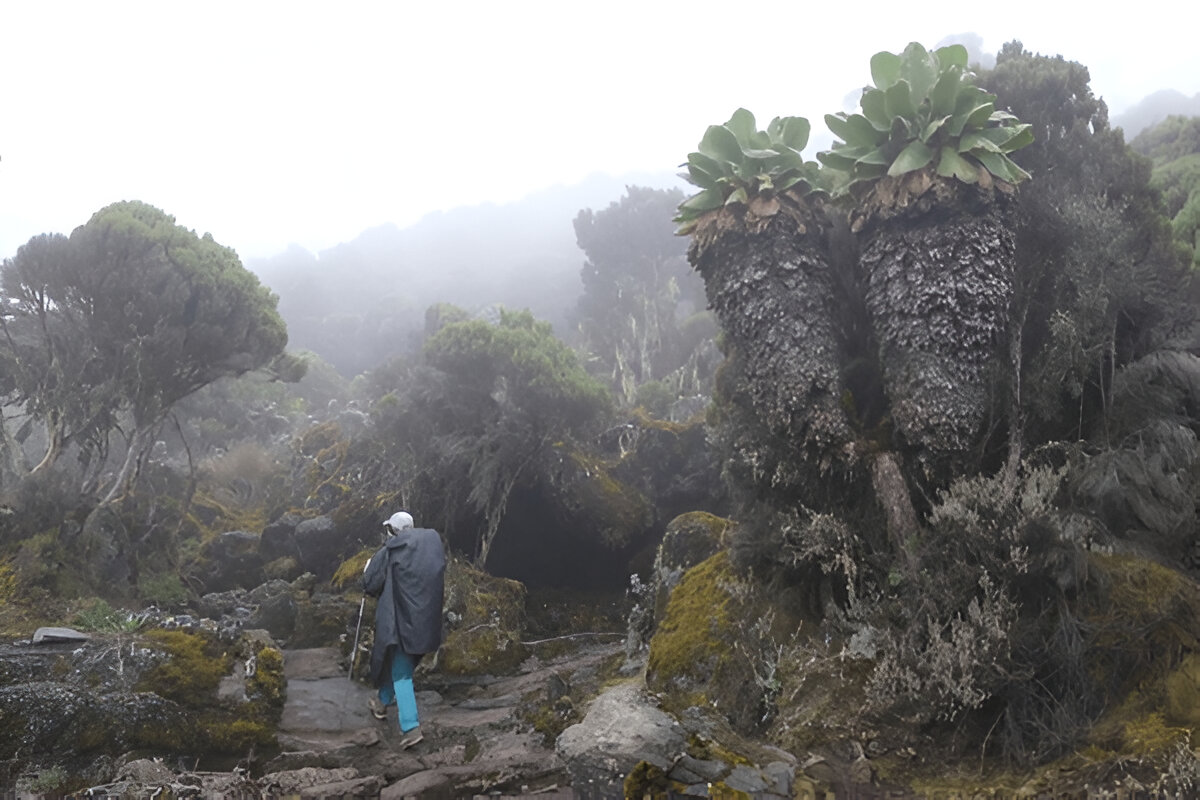 Kilimanjaro isn’t just a long walk uphill. The mountain sits inside a national park, and Tanzania charges serious fees for every single day you spend there. These park fees — conservation fees, camping fees, hut fees, and rescue fees — are non-negotiable and make up a huge chunk of any operator’s quote. On a seven-day climb, park fees alone can run into several hundred dollars per person before anyone pays a single guide or buys a single meal. So when you ask how much does Kilimanjaro cost, understanding these fixed charges explains a lot of the price spread.
 Everything on Kilimanjaro gets carried up on someone’s back or head. Fresh food, cooking fuel, tents, sleeping mats, medical kits, oxygen cylinders, and portable toilets all need to be transported from town to the trailhead and then up the mountain day by day. The logistics of feeding a group three hot meals a day at 4,000 meters — with ingredients hauled in from Moshi or Arusha — is genuinely expensive to do well.
Rescue support adds another layer. Kilimanjaro National Park requires every climber to be covered by its rescue service, and reputable operators carry backup oxygen and have evacuation plans in place. All of this is baked into the cost of a responsible climb — and it’s exactly what gets stripped out when a price looks too good to be true. In the end, how much does Kilimanjaro cost really depends on these operational decisions.
Everything on Kilimanjaro gets carried up on someone’s back or head. Fresh food, cooking fuel, tents, sleeping mats, medical kits, oxygen cylinders, and portable toilets all need to be transported from town to the trailhead and then up the mountain day by day. The logistics of feeding a group three hot meals a day at 4,000 meters — with ingredients hauled in from Moshi or Arusha — is genuinely expensive to do well.
Rescue support adds another layer. Kilimanjaro National Park requires every climber to be covered by its rescue service, and reputable operators carry backup oxygen and have evacuation plans in place. All of this is baked into the cost of a responsible climb — and it’s exactly what gets stripped out when a price looks too good to be true. In the end, how much does Kilimanjaro cost really depends on these operational decisions.
 The package price you see online is only part of the story. This Kilimanjaro total cost guide accounts for the full picture. If you’re flying in from the United States, Europe, or the Middle East, your all-in cost includes several additional pieces that first-time climbers often overlook. International flights to Kilimanjaro International Airport typically range from several hundred to well over a thousand dollars depending on your origin and season. A Tanzanian tourist visa costs $50 to $100 for most nationalities, with US passport holders paying $100.