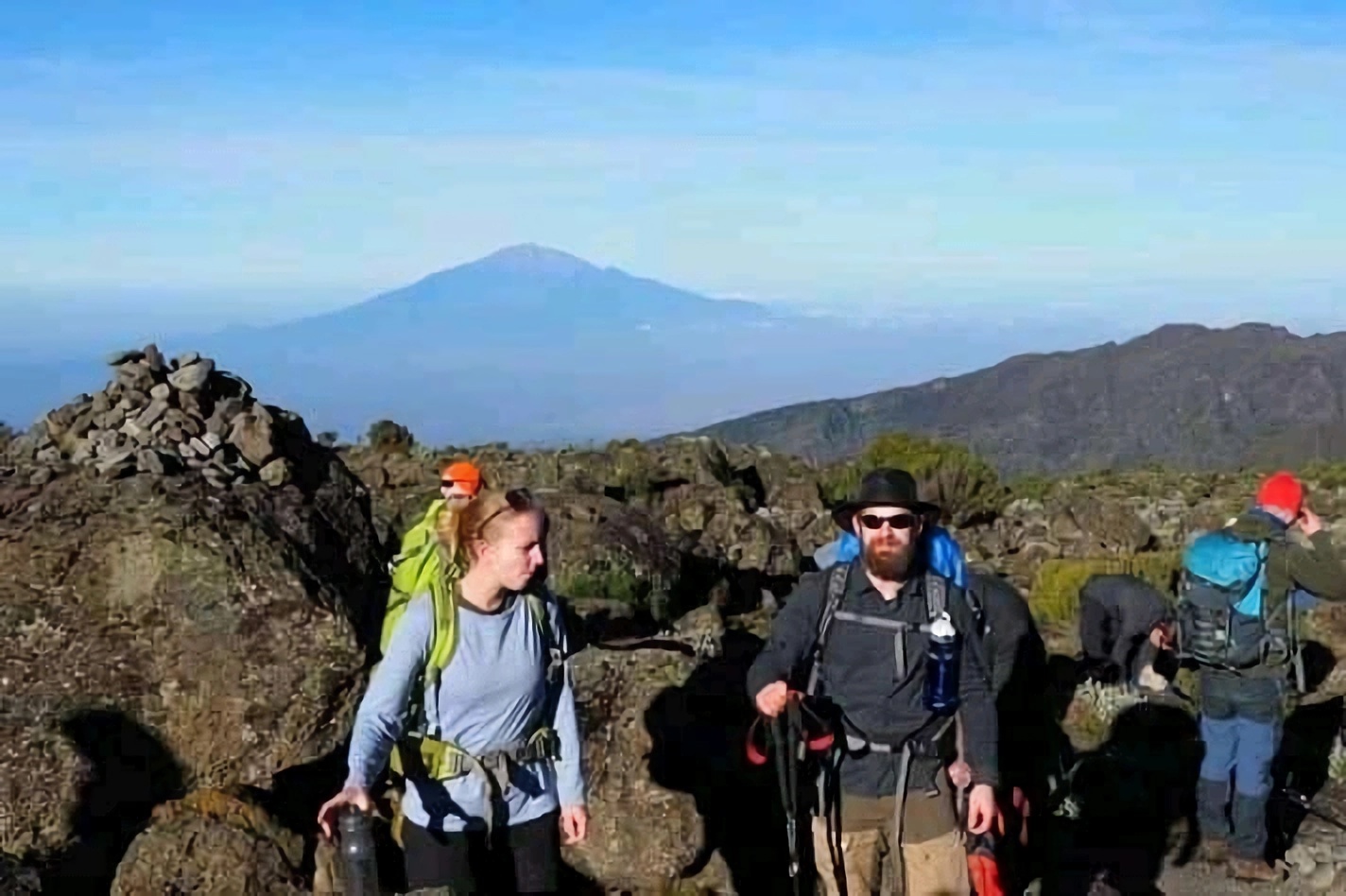
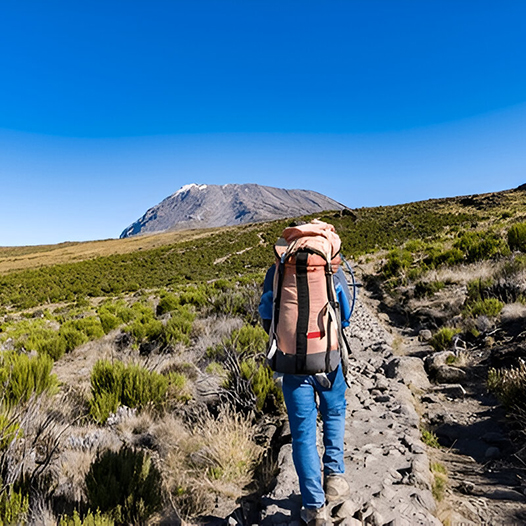
Because Mount Kilimanjaro sits near the equator and rises to 5,895 metres, it is large enough to create its own distinct microclimate — defined not by seasons, but by wet and dry cycles.
Temperatures and precipitation vary drastically based on your current elevation and whether it is day or night. To summit successfully, you must understand these seasonal shifts and plan your trail wardrobe accordingly.
The Trade Winds Driving the Weather
Kilimanjaro's climate is dictated by two massive, predictable atmospheric wind patterns that carry moisture directly from the Indian Ocean.
South-East Trade Winds (March – May): These low-altitude winds are heavy with ocean moisture. As they slam into the southern face and force upwards, they cool rapidly and condense, creating massive rain clouds. Because they hit from the south, the northern slopes sit in a natural rain shadow.
North-East Anti-Trade Winds (Late May – October): These high-altitude winds blow across the high desert saddle between Kibo and Mawenzi peaks. They carry almost no moisture and push rainy clouds below the 3,000-metre mark — resulting in crystal-clear blue skies on the upper routes throughout the summer.
Kilimanjaro's 4 Distinct Climate Zones
As you ascend the mountain, you pass through four radically different environmental zones, each with its own unique temperatures and landscapes.
| Zone | Elevation | Conditions |
|---|---|---|
| Rainforest | 800–3,000m | Warm, humid, frequent mist and light tropical drizzle. Blue & colobus monkeys, orchids. |
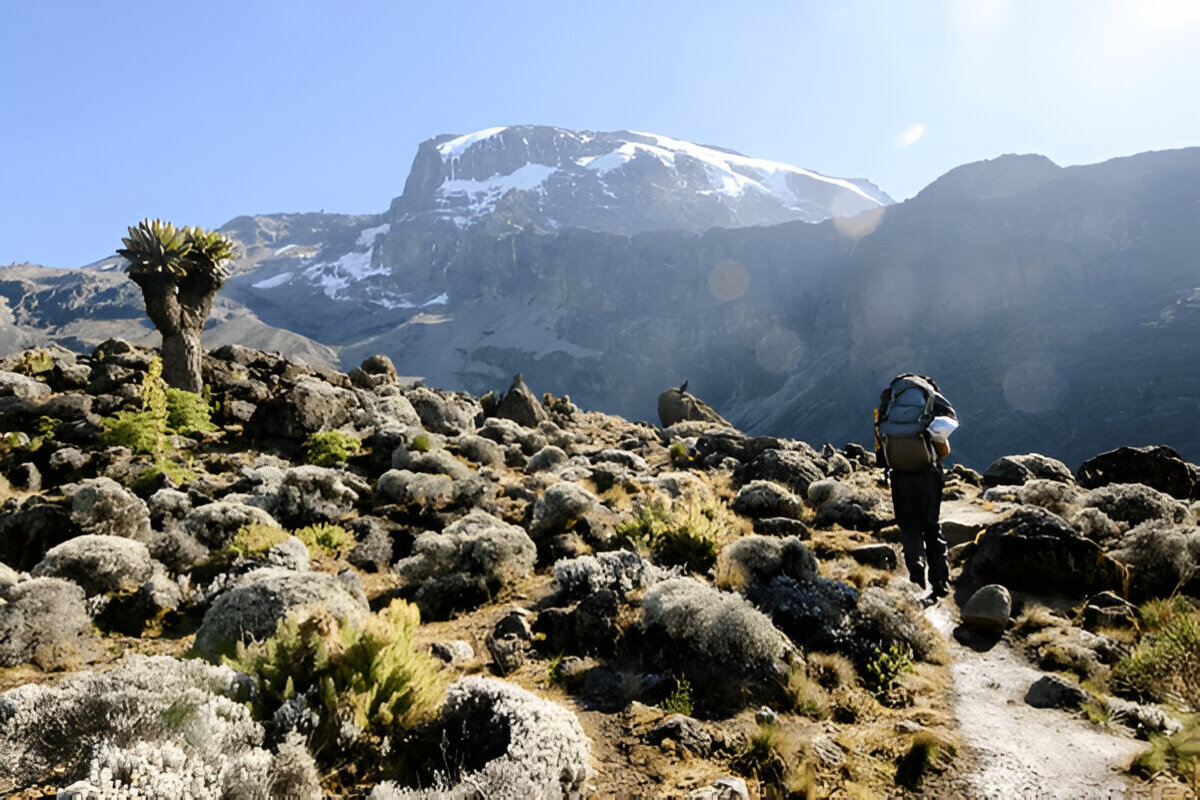
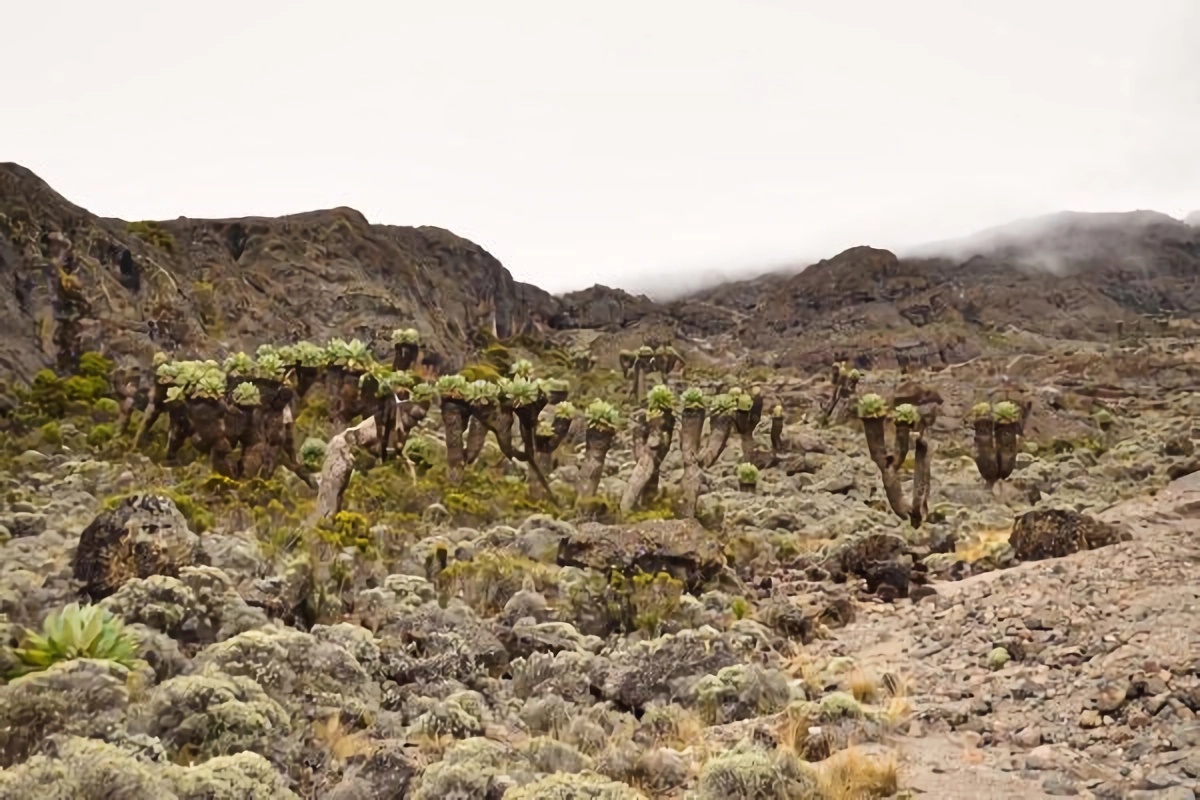
| Low Alpine | 3,000–4,200m | Semi-arid moorlands, giant Senecio trees. Warm by day, sub-zero temperatures after sunset. |
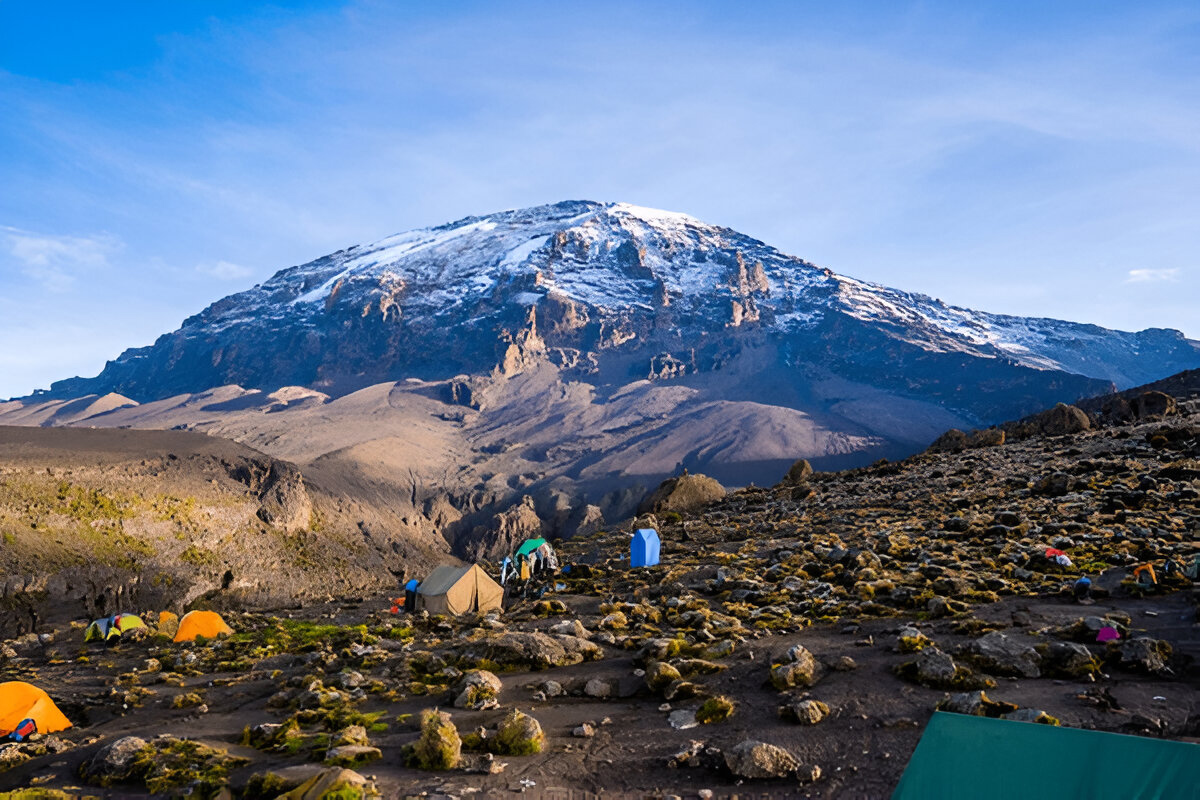
| High Alpine Desert | 4,200–5,000m | Stark volcanic landscape, zero shade, intense solar radiation. Baking days, freezing nights. |
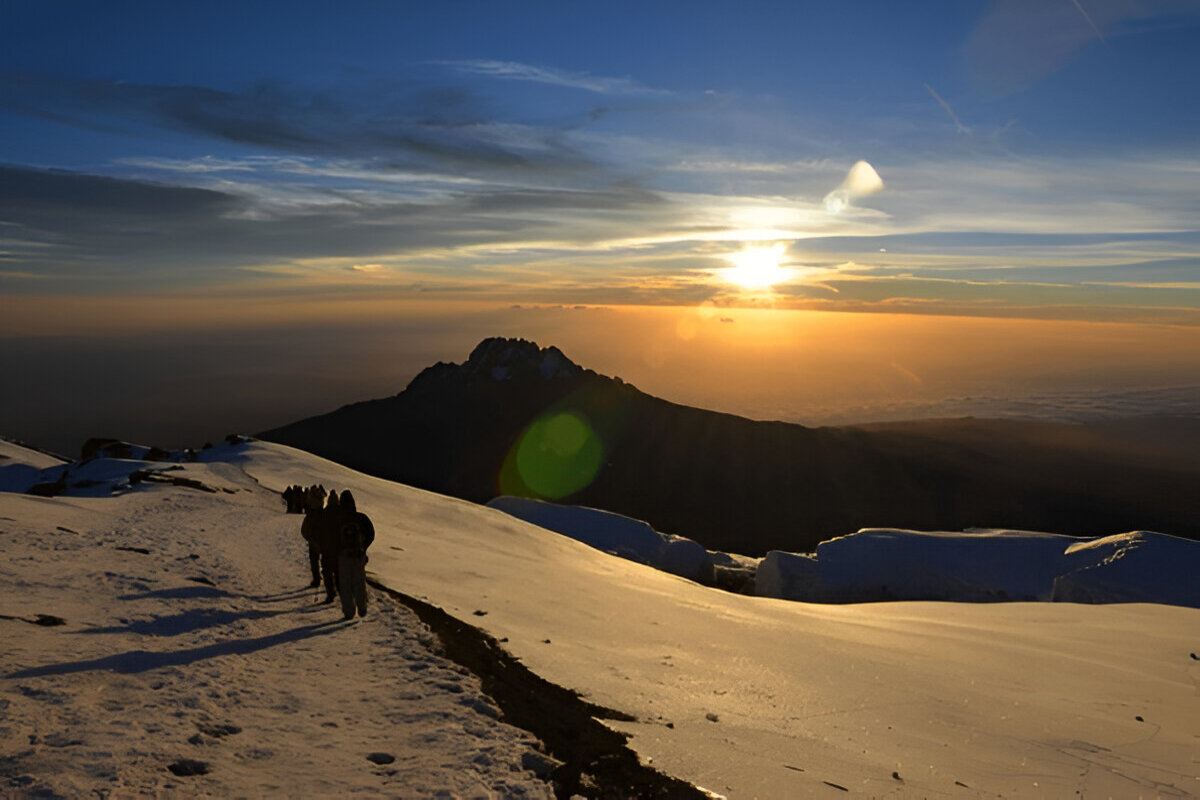
| Glacial Arctic | 5,000–5,895m | Thin air, massive glaciers, loose volcanic silt. Daytime near freezing; nights 0°C to -20°C. |
The Hidden Summit Factor: Wind Chill
While an ambient temperature of -2°C might sound manageable, extreme gale-force winds are incredibly common at the high camps. A strong wind-chill factor can instantly make a -2°C night feel like a punishing -15°C (5°F).
High winds also kick up fine glacial dust, making a reliable pair of clear safety goggles an invaluable addition to your summit daypack.
Real-Time Weather Planning Resources
For live tracking as your departure date approaches, monitor the multi-altitude forecasts on Mountain-Forecast or review the historic glacial change data preserved by the University of Massachusetts climate research team.
Select Your Perfect Climbing Window
Ready to experience a clear, sun-drenched morning on the Shira Plateau? Choosing the right season and combining it with a high-safety itinerary is the best way to guarantee a successful summit. Let us help you lock in the perfect dates for your adventure.